
整理/李思 制圖/董怡璇
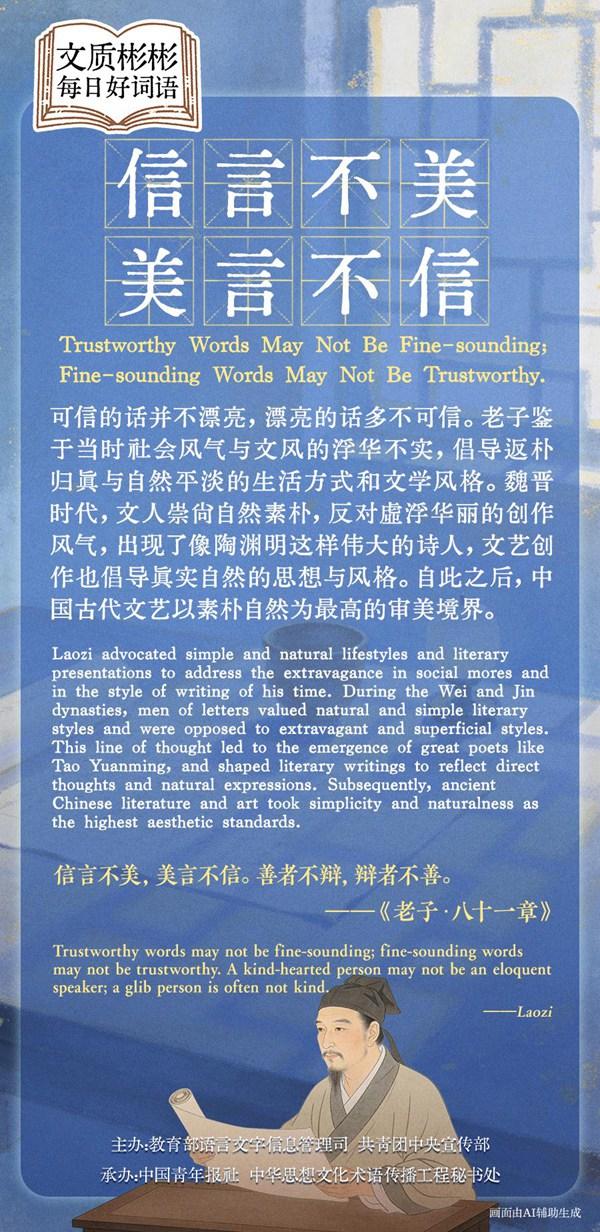
信言不美,美言不信
可信的話并不漂亮,漂亮的話多不可信。老子鑒于當時社會風氣與文風的浮華不實,倡導返樸歸真與自然平淡的生活方式和文學風格。魏晉時代,文人崇尚自然素樸,反對虛浮華麗的創作風氣,出現了像陶淵明這樣偉大的詩人,文藝創作也倡導真實自然的思想與風格。自此之后,中國古代文藝以素樸自然為最高的審美境界。
Trustworthy Words May Not Be Fine-sounding; Fine-sounding Words May Not Be Trustworthy
Laozi advocated simple and natural lifestyles and literary presentations to address the extravagance in social mores and in the style of writing of his time. During the Wei and Jin dynasties, men of letters valued natural and simple literary styles and were opposed to extravagant and superficial styles. This line of thought led to the emergence of great poets like Tao Yuanming, and shaped literary writings to reflect direct thoughts and natural expressions. Subsequently, ancient Chinese literature and art took simplicity and naturalness as the highest aesthetic standards.
引例
信言不美,美言不信。善者不辯,辯者不善。(《老子·八十一章》)(可信的話并不漂亮,漂亮的話多不可信。善良的人往往并非能言善辯,能言善辯的人往往不善良。)
Trustworthy words may not be fine-sounding; fine-sounding words may not be trustworthy. A kind-hearted person may not be an eloquent speaker; a glib person is often not kind. (Laozi)
版權所有:中華人民共和國教育部 中文域名:教育部.政務
京ICP備10028400號-1 京公網安備11010202007625號 網站標識碼:bm05000001




