
整理/沈杰群 制圖/張玉佳
意興
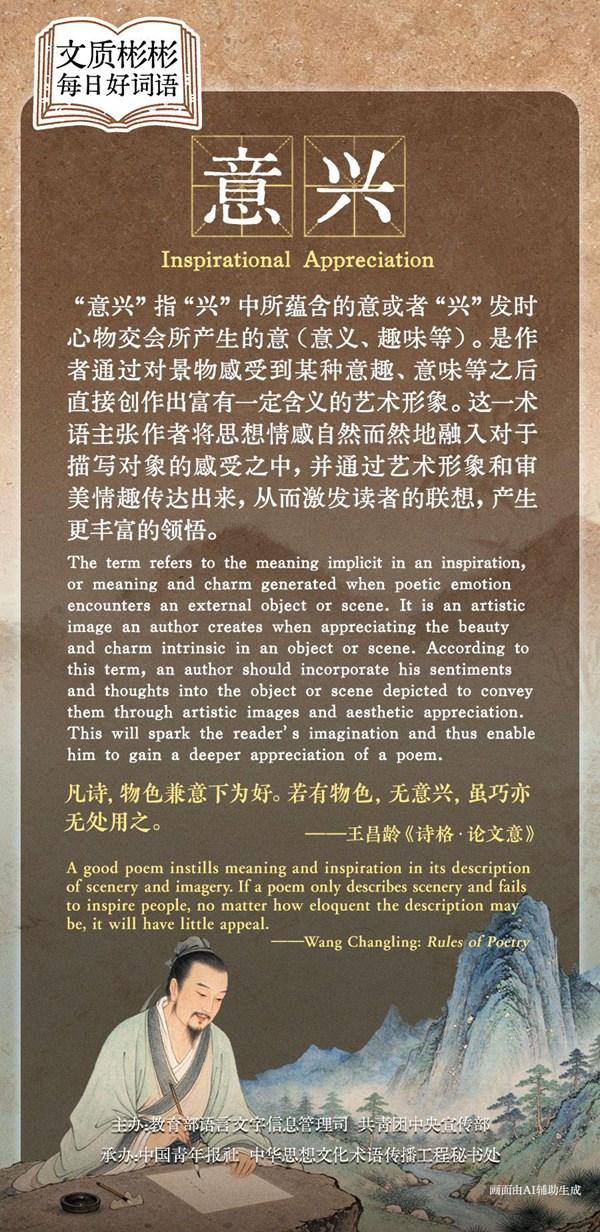
“意興”指“興”中所蘊含的意,或“興”發(fā)時心物交會所產生的意(意義、趣味等),是作者通過景物感受到某種意趣、意味之后直接創(chuàng)作出富有一定含義的藝術形象。這一術語主張作者將思想情感自然而然地融入對描寫對象的感受之中,并通過藝術形象和審美情趣傳達出來,從而激發(fā)讀者的聯(lián)想,產生更豐富的領悟。
Inspirational Appreciation
The term refers to the meaning implicit in an inspiration, or meaning and charm generated when poetic emotion encounters an external object or scene. It is an artistic image an author creates when appreciating the beauty and charm intrinsic in an object or scene. According to this term, an author should incorporate his sentiments and thoughts into the object or scene depicted to convey them through artistic images and aesthetic appreciation. This will spark the reader's imagination and thus enable him to gain a deeper appreciation of a poem.
引例
凡詩,物色兼意下為好。若有物色,無意興,雖巧亦無處用之。(王昌齡《詩格·論文意》)(但凡詩歌,景物描寫、意義與趣味兼?zhèn)渥詈谩H绻蛔⒅鼐拔锩鑼懀鄙僖馀d,描寫技巧再高超也無處施展。)
A good poem instills meaning and inspiration in its description of scenery and imagery. If a poem only describes scenery and fails to inspire people, no matter how eloquent the description may be, it will have little appeal. (Wang Changling: Rules of Poetry)

版權所有:中華人民共和國教育部 中文域名:教育部.政務
京ICP備10028400號-1 京公網安備11010202007625號 網站標識碼:bm05000001




