
整理/沈杰群 制圖/張玉佳
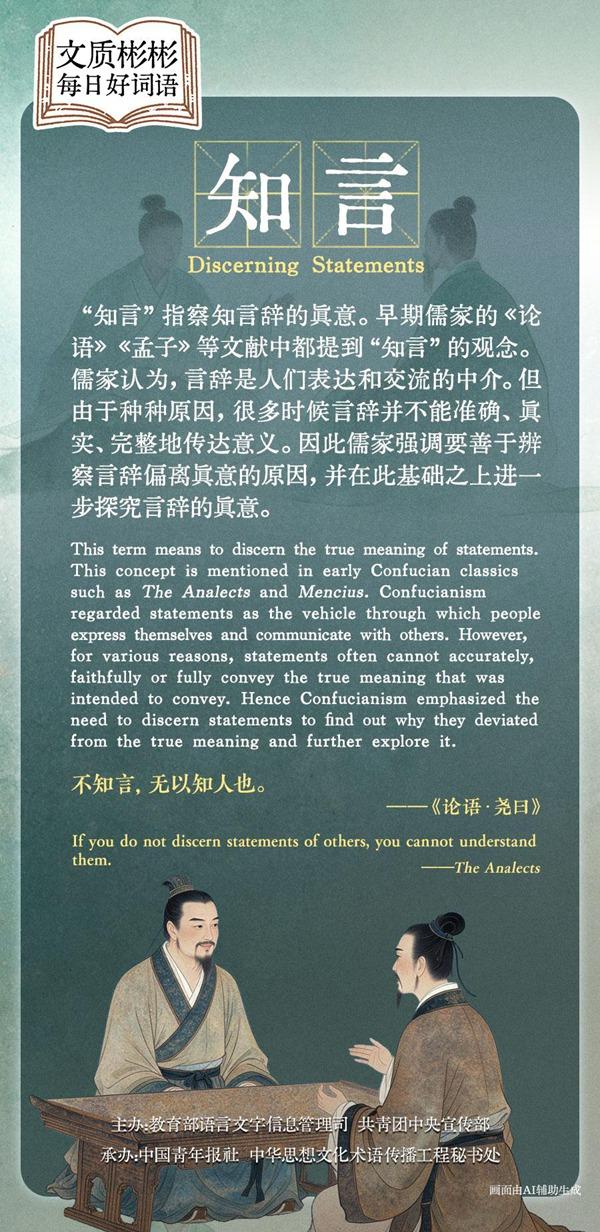
知言
“知言”指察知言辭的真意。早期儒家的《論語》《孟子》等著作中都提到“知言”的概念。儒家認為,言辭是人們表達和交流的中介,但由于種種原因,很多時候言辭并不能準確、真實、完整地傳達意義。因此儒家強調要善于辨察言辭偏離真意的原因,并在此基礎之上進一步探究言辭的真意。
Discerning Statements
This term means to discern the true meaning of statements. This concept is mentioned in early Confucian classics such as The Analects and Mencius. Confucianism regarded statements as the vehicle through which people express themselves and communicate with others. However, for various reasons, statements often cannot accurately, faithfully or fully convey the true meaning that was intended to convey. Hence Confucianism emphasized the need to discern statements to find out why they deviated from the true meaning and further explore it.
引例
不知言,無以知人也。(《論語·堯曰》)(不善于分辨別人的話,就不能真正地了解他們。)
If you do not discern statements of others, you cannot understand them. (The Analects)
版權所有:中華人民共和國教育部 中文域名:教育部.政務
京ICP備10028400號-1 京公網安備11010202007625號 網站標識碼:bm05000001




